Gold as an Investment: Navigating Volatility and Future Opportunities
Gold has captivated humanity for millennia, revered by ancient civilizations and cherished today as both a precious metal and a cornerstone investment. Its enduring allure stems from its perceived role as a safe haven asset, a reliable store of value particularly during times of economic uncertainty and geopolitical turmoil. However, the journey of gold as an investment is far from linear, marked by significant
volatility and a complex interplay of global factors that dictate its price, commonly referred to as the
Goldpreis. Understanding these dynamics is crucial for any investor looking to incorporate gold into their portfolio, weighing its risks against its undeniable potential.
Gold's Enduring Appeal and its Volatile Nature
From the Pharoahs who worshipped gold as the "flesh of the sun" to modern investors seeking refuge from inflation, gold's status as a valuable commodity is deeply ingrained. Historically, it has served as a hedge against currency devaluation and an anchor during periods of crisis. Yet, recent years have underscored gold's inherent volatility, demonstrating that even its safe haven status can be challenged by unforeseen market forces.
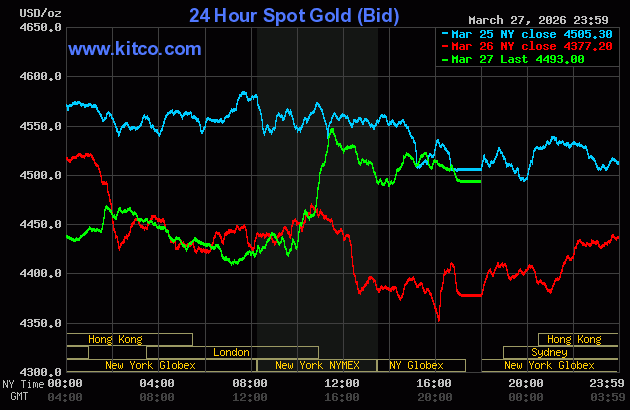
Consider periods where geopolitical tensions are high, such as the implications of the "Iran-Krieg" referenced in market analysis. While such conflicts traditionally drive investors towards gold, we've seen instances where the
Goldpreis has experienced significant losses, sometimes plummeting by substantial percentages despite escalating global uncertainty. This phenomenon can be attributed to several factors: a strong US Dollar can make gold more expensive for international buyers, reducing demand, and the anticipation or absence of interest rate cuts can divert investment flows away from non-yield-bearing assets like gold. Moreover, speculative trading can introduce exaggerated price swings, detaching the gold price from underlying fundamentals in the short term. This intricate dance between fear, greed, and economic reality makes predicting gold's precise movements a formidable challenge.
Key Drivers of the Goldpreis: Unpacking the Influences
The value of gold, and thus the
Goldpreis, is influenced by a confluence of global macroeconomic and geopolitical factors. For investors, monitoring these drivers is essential for making informed decisions:
- Geopolitical Tensions: Escalating conflicts, political instability, and international crises typically boost gold's appeal as investors seek safety. However, as noted, the market's reaction can sometimes be counterintuitive due to other overriding factors.
- Inflationary Pressures: When inflation threatens to erode the purchasing power of fiat currencies, investors often turn to gold as a traditional inflation hedge. The current environment, with inflation making a comeback and markets facing a decisive phase, highlights gold's renewed relevance in this regard.
- Central Bank Monetary Policy: Interest rate decisions by central banks, particularly the U.S. Federal Reserve, heavily impact gold. Higher interest rates increase the opportunity cost of holding gold (which yields no interest), while lower rates or quantitative easing tend to support the Goldpreis. The prospect of delayed rate cuts, for instance, can dampen gold demand.
- Strength of the U.S. Dollar: Since gold is primarily traded in U.S. dollars on the global spot market, a stronger dollar makes gold more expensive for holders of other currencies, potentially decreasing demand and putting downward pressure on its price.
- Supply and Demand Dynamics: Global mining output, central bank gold reserves, and industrial/jewelry demand all play a role. Government policies, such as restrictions on gold exports (e.g., past measures like limiting gold exports from Russia), can also impact supply dynamics.
- Investor Sentiment and Speculation: Market sentiment, fueled by news, analyst reports, and speculative trading, can significantly amplify price movements, sometimes leading to irrational exuberance or panic selling.
Given these factors, some analysts are asking if we're on the cusp of a new commodity boom, similar to the 1970s, which saw significant gold rallies driven by energy crises and high inflation. The current environment, characterized by increasing uncertainty, energy challenges, and geopolitical strains, indeed brings gold and gold mining stocks back into sharp focus.
Navigating the Global Gold Market: From Spot Price to Local Valuation
Understanding how the global gold price translates to local markets, particularly in the Eurozone, is vital. The "Goldpreis" in Euros is not set independently by individual countries like Belgium or Germany. Instead, it is directly derived from the global spot gold market, where gold is predominantly traded in US dollars.
The process involves:
- Global Spot Price (USD): The foundational benchmark is the international spot price of gold per troy ounce, quoted in U.S. dollars. This price reflects real-time supply and demand dynamics across major trading hubs.
- Currency Conversion: For Eurozone investors, this USD price is converted into Euros using the prevailing EUR/USD exchange rate. A fluctuating exchange rate can significantly impact the Goldpreis in Euros, even if the dollar price of gold remains relatively stable. This conversion process is a critical factor influencing Euro valuation.
- Local Adjustments: Finally, local premiums, dealer margins, and value-added tax (VAT) considerations are applied. For investment gold (e.g., 24-karat bullion bars or specific coins), VAT is often reduced or entirely exempt in many European countries, but other local charges may apply. These minor adjustments create slight variations in gold prices between different European markets.
This real-time, globally interconnected pricing mechanism means that the
Goldpreis is highly volatile, responding instantly to a multitude of unpredictable macroeconomic and geopolitical variables. As such, any attempt to forecast an exact future gold price, even for a specific date like February 2026, is inherently speculative and unreliable. Current and historical gold price data can be reliably monitored through reputable financial platforms, banks, or bullion dealers, providing a basis for informed decision-making, but forward-looking statements remain uncertain.
Future Opportunities and Strategic Considerations for Gold Investors
Despite its volatility, gold's role as a portfolio diversifier and a long-term store of value remains compelling for many investors. Analyst firms like UBS continue to view gold as an important portfolio hedge, especially amidst persistent global uncertainties.
For those considering an investment in gold, here are some strategic considerations and opportunities:
- Diversification: Gold often moves inversely or dissimilarly to traditional financial assets like stocks and bonds, making it an excellent tool for portfolio diversification and potentially reducing overall risk.
- Inflation Hedge: As discussed, in an environment where inflation risks are elevated, gold can offer protection against the erosion of purchasing power.
- Geopolitical Insurance: While not always a perfectly correlated response, gold typically performs well during periods of heightened geopolitical risk, acting as a "crisis hedge."
- Gold Mining Stocks: Beyond physical gold, investing in gold mining companies can offer leverage to rising gold prices. However, these investments come with additional risks related to operational challenges, management, and regulatory environments.
- Long-Term Perspective: Gold is generally considered a long-term investment. Short-term speculative trading carries significant risk due to its inherent volatility. "Insiders" often emphasize a long-term view, buying during dips and holding for sustained appreciation.
- Access Methods: Investors can gain exposure to gold through various means:
- Physical Gold: Bars, coins (e.g., 24-karat gold for investment purposes) offer direct ownership and tangible security.
- Gold ETFs (Exchange Traded Funds): Provide exposure to gold's price movements without the need for physical storage.
- Gold Futures and Options: For experienced investors, these derivatives offer leveraged exposure but come with higher risks.
- Risk Management: Be aware of potential governmental interventions or capital controls, such as restrictions on exporting large quantities of gold, which, though rare, can impact liquidity and access.
Conclusion
Gold's journey as an investment is a testament to its enduring value and its complex relationship with global economic and political forces. While its traditional role as a safe haven is sometimes challenged by market dynamics, the
Goldpreis remains a critical indicator of economic health and investor sentiment. Navigating its volatility requires a nuanced understanding of its drivers – from geopolitical tensions and interest rate policies to currency strength and inflation. For astute investors, gold continues to offer significant opportunities for portfolio diversification and wealth preservation, especially in an increasingly uncertain world, provided they approach it with a well-researched, long-term perspective.